
The Wisdom of Ayurveda
Harmony in Mind, Body, and Spirit
Ayurveda, translated from Sanskrit as “The Science of Life,” is more than a medical system. It is a way of living in harmony with nature, the body, the mind, and the spirit.
Rather than looking only at symptoms, Ayurveda seeks to understand the root cause of imbalance. It treats each person as a whole individual, considering lifestyle, diet, environment, emotions, digestion, sleep, and natural constitution.
The goal of Ayurveda is not only to treat illness, but also to support balance, prevention, and long-term wellbeing.
The Foundation: The Five Elements
Ayurveda teaches that everything in the universe, including the human body, is made from five great elements, known as Pancha Mahabhuta.
Space (Akasha)
The element of expansion and openness
Air (Vayu)
The element of movement and change
Fire (Tejas)
The element of transformation and metabolism
Water (Jala)
The element of flow and cohesion
Earth (Prithvi)
The element of stability and structure
When these elements combine in the human body, they form three main life energies known as Doshas.
Understanding the Three Doshas
The three Doshas are Vata, Pitta, and Kapha. They are the biological energies that influence physical health, mental patterns, digestion, movement, structure, and emotional tendencies.
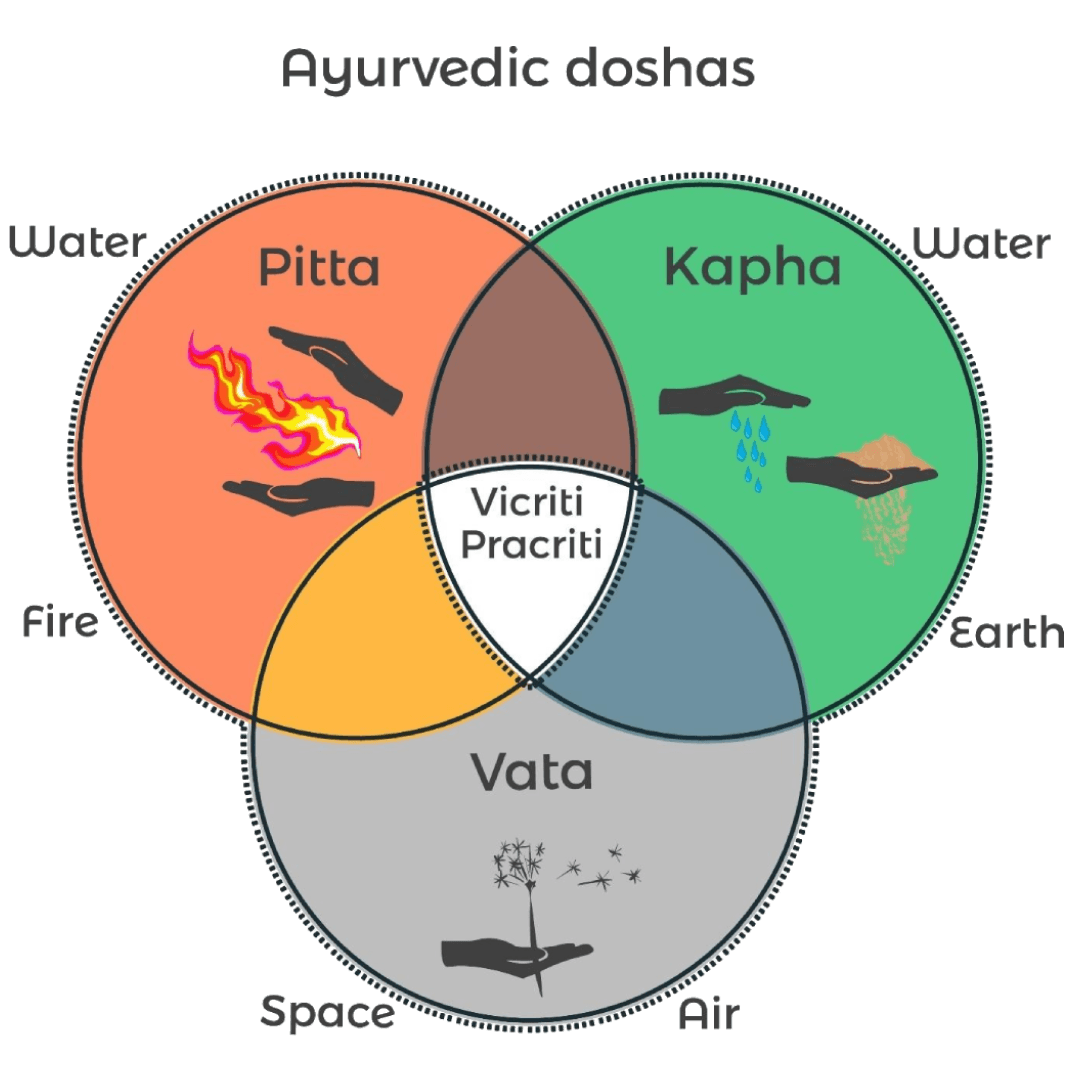
Everyone has a unique combination of these three Doshas. This natural constitution is known as Prakriti. Understanding your Prakriti helps explain why different people respond differently to food, weather, stress, sleep, and lifestyle habits.
When the Doshas are balanced, the body and mind function well. When they become imbalanced, discomfort and illness may begin to appear.
The Three Doshas in Detail
Vata
The Energy of Movement
Vata governs movement and communication in the body. It is connected to breathing, circulation, nerve impulses, movement of thoughts, and the natural flow of energy.
When Vata is balanced
- Creativity
- Flexibility
- Energy
- Enthusiasm
- Quick thinking
When Vata is imbalanced
- Anxiety or restlessness
- Dry skin
- Bloating or gas
- Irregular digestion
- Difficulty sleeping
- Feeling scattered or overwhelmed
Pitta
The Energy of Transformation
Pitta governs digestion, metabolism, body temperature, and transformation. It also relates to focus, understanding, decision-making, and the ability to process both food and information.
When Pitta is balanced
- Strong digestion
- Clear thinking
- Confidence
- Natural leadership
- Good focus
When Pitta is imbalanced
- Irritability
- Acid reflux
- Inflammation
- Skin rashes
- Excess heat in the body
- Anger or impatience
Kapha
The Energy of Structure
Kapha provides structure, strength, stability, and lubrication in the body. It supports tissues, joints, immunity, endurance, and emotional calmness.
When Kapha is balanced
- Calmness
- Strength
- Loyalty
- Patience
- Stable energy
- Healthy immunity
When Kapha is imbalanced
- Weight gain
- Lethargy
- Congestion
- Heaviness
- Slow digestion
- Attachment or resistance to change
The Science of Balance: From Elements to Energy
In Ayurveda, health is understood through the relationship between the five elements and the three Doshas.
The Doshas are formed from combinations of the elements:
Vata
Space + Air
The energy of movement and communication.
Pitta
Fire + Water
The energy of digestion and transformation.
Kapha
Water + Earth
The energy of structure and lubrication.
Understanding these patterns helps Ayurveda identify why imbalance may appear differently in each person. For example, two people may both experience digestive discomfort, but the underlying Dosha imbalance may be different.
This is why Ayurvedic care is personalised rather than one-size-fits-all.
Wellness vs. Illness: Prakriti and Vikriti
Ayurveda looks at two important states of health: Prakriti and Vikriti.
Prakriti: Your Natural Constitution
Prakriti is your natural birth constitution. It is your unique “factory setting,” shaped by your natural balance of Vata, Pitta, and Kapha.
When your Doshas are close to your natural Prakriti, you may experience:
- Better vitality
- Mental clarity
- Stronger immunity
- Better digestion
- Emotional balance
Vikriti: Your Current Imbalance
Vikriti is your current state of imbalance. It can be affected by lifestyle, diet, stress, sleep, weather, age, emotions, and daily habits.
When one or more Doshas become aggravated, symptoms may begin to appear. Ayurveda aims to understand this imbalance and guide the person back toward balance through suitable lifestyle, diet, herbs, routines, and care.
A Personalised Approach to Wellbeing
Ayurveda recognises that every person is different. What supports one person may not suit another. This is why understanding your constitution and current imbalance is important.
An Ayurvedic consultation may help identify:
- Your natural constitution
- Current signs of imbalance
- Lifestyle patterns affecting your health
- Diet and routine adjustments
- Areas where the body may need support
- Preventive steps for long-term wellbeing
Important Note
This information is for educational purposes only. It should not replace medical advice, diagnosis, or treatment from a qualified healthcare professional.
If you have symptoms, a medical condition, or are taking medication, please consult a qualified practitioner before starting any new treatment, herbs, supplements, or major lifestyle changes.
Book an Ayurvedic Consultation
If you would like to understand your body constitution, current imbalance, and personalised wellness approach, you can book an Ayurvedic consultation with the doctor.
Book Consultation